

FAQs Expert answers to your electrical questions
We've gathered answers to the questions we're asked most. If yours isn't here, just get in touch. We're happy to help.
About us
Who is Jordans Electrical?
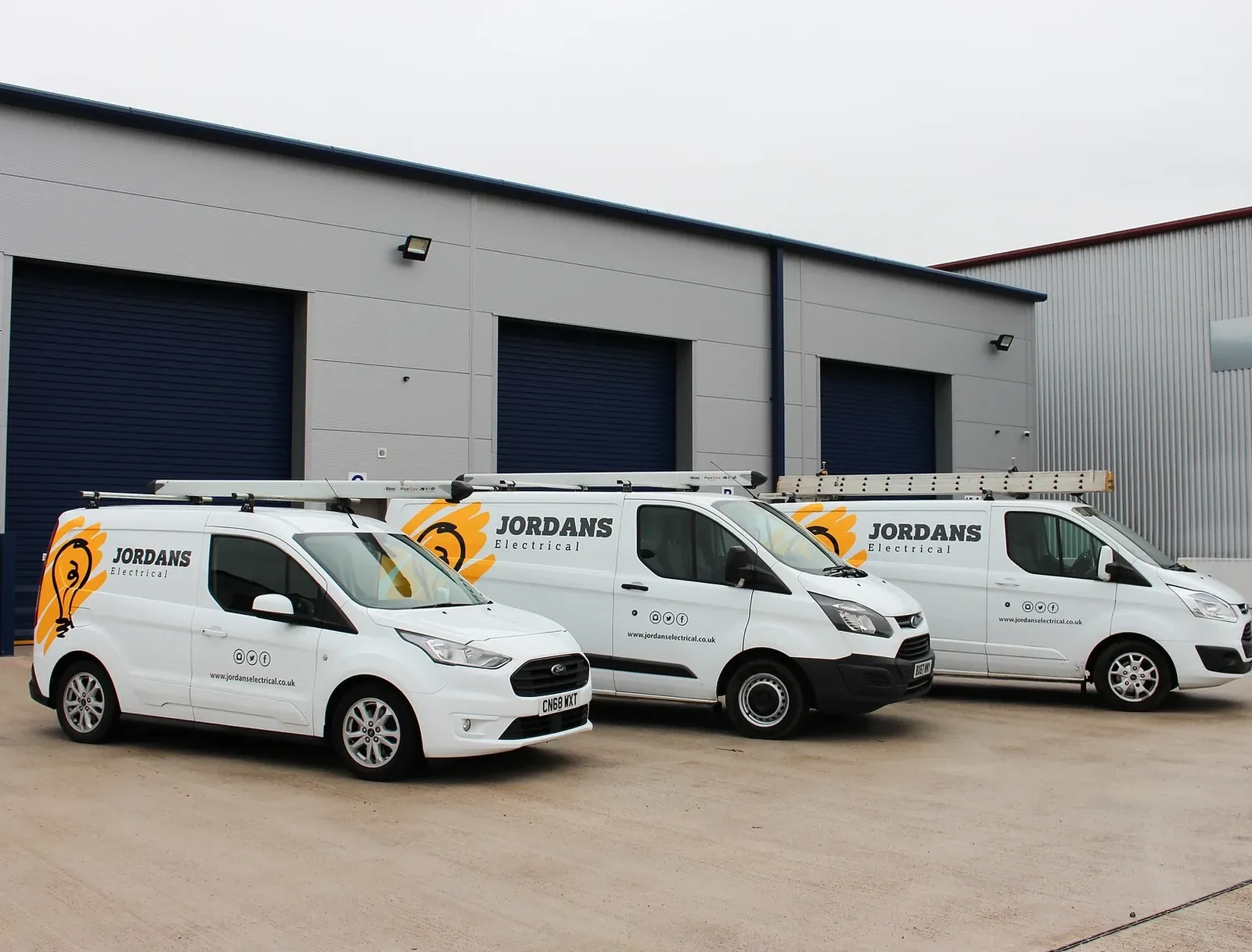
We started out in 2013 as one electrician with an apprentice. Today we're a team of nine skilled engineers, electricians and improvers, working from our base in Bedwas for homes and businesses across Cardiff and South Wales.
What types of electrical work do you do?
We cover homes and businesses, from new installations and full or partial rewires to upgrades, repairs, safety inspections and testing, lighting design and power infrastructure. If it involves electrics, ask us.
Do you work for both homes and businesses?
Yes. We look after homeowners, landlords and businesses, and have the expertise and equipment for residential and commercial work alike.
Which areas do you cover?
We're based in Bedwas and cover Cardiff and the towns around it, including Caerphilly, Newport, Penarth, Barry, Bridgend, Pontypridd and Cwmbran. If you can't see your area on our Areas page, give us a call and we'll let you know.
What makes Jordans Electrical different?
We care about doing the job properly, and we have an experienced, skilled team to do it. Customers often tell us it's the standard of the work and how well we keep them informed that stand out.
Quotes & booking
How do your quotes work?
Our pricing is honest and transparent. We give you an accurate quote before any work begins, so you know exactly what to expect and there are no surprises.
How do I get a quote?
Call us on 02922 780 300, email info@jordanselectrical.co.uk, or use the quote form on this site. Tell us what needs doing and add photos if you can. A picture of the fuse board, the fault or the room helps us understand the job.
How long does a typical job take?
Simple jobs can take just a few hours. Bigger projects, like a full house rewire or a commercial upgrade, can run over several days to allow for proper planning, installation and testing.
I'm not sure what I need. Can you advise?
Of course. Tell us what's happening or what you'd like to achieve and we'll talk it through, explain your options and recommend the right approach before you commit to anything.
Emergencies
Do you offer emergency call-outs?
Yes. Our emergency service runs around the clock, every day of the week, so urgent electrical problems at home or at work get dealt with quickly. Call us and choose the emergency option. If a fault has caused a fire or a medical emergency, call 999 first.
What should I do in an electrical emergency?
If a fault has caused a fire or a medical emergency, call 999 first. If it's safe to do so, switch the power off at your consumer unit. Then call us on 02922 780 300 and choose the emergency option, and we'll be with you as soon as possible.
What should I do if I smell burning?
If it's safe to do so, switch the power off at your consumer unit straight away, then call us. Burning smells or unusual noises from your electrics can point to a serious fault that needs urgent attention.
My power has gone off. What should I check first?
See whether it's just your property. If your neighbours are off too, it is probably a fault on the network, which you can report by calling 105. If it's only you, check your consumer unit for a switch that has tripped. If it trips again when you reset it, or you can't find the cause, call us.
Why does my fuse board keep tripping?
A switch that keeps tripping usually points to a faulty appliance, an overloaded circuit or a fault in the wiring. Try unplugging the appliances on that circuit and resetting it. If it carries on, don't keep resetting it. Call us and we'll track the fault down.
Home electrics
How do I know if my home needs rewiring?
Common signs are an old fuse board with rewirable fuses, sockets or switches that scorch or feel warm, lights that flicker or dim, frequent tripping, and old rubber- or fabric-covered cabling. An inspection will tell you for certain, and whether a full or a partial rewire is the right answer.
When should a fuse board be upgraded?
Older boards may not have RCD protection, which cuts the power quickly if there's a fault. If yours has rewirable fuses, shows signs of heat damage, or you're adding new circuits, it's worth having it checked. We upgrade fuse boards and consumer units as part of our residential work.
What is an EICR?
An Electrical Installation Condition Report is the formal record of an electrical safety inspection. An electrician inspects and tests the fixed wiring, sockets, switches and consumer unit, then reports on their condition and anything that needs attention.
How often should my electrics be inspected?
As a general guide, every ten years for a home you own, and whenever you move. Rented properties need checking more often: landlords in Wales must hold a valid report and renew it at least every five years.
Do you carry out electrical safety inspections?
Yes. Our inspections follow all the relevant regulations and are designed to find potential hazards before they become problems, so you know your installation is working safely and complies with current standards.
Can you install smart home and security systems?
Yes. Smart home automation is one of our residential services, alongside CCTV, intruder alarms, intercoms, fire detection, and indoor and garden lighting.
Businesses & landlords
What commercial electrical work do you do?
Electrical design, cable calculations and distribution network design, testing and inspection, rewires, fault finding, distribution board installation and maintenance, data and communications cabling, heating and ventilation, and business automation. We also install fire detection, CCTV, alarms, intercoms and emergency lighting.
Do you offer maintenance contracts?
Yes. A contract can include routine inspections and testing, upkeep of your electrical installation, reactive repairs and fault finding, EICR condition reports, PAT testing and distribution board maintenance. Every property is different, so each contract is tailored to your site.
Will we get the certification we need for our records?
Yes. Commercial work is carried out to BS 7671 by an NICEIC Approved Contractor, with the documentation and certification your business needs.
Do you provide reports for landlords and homebuyers?
Yes. We carry out landlord and homebuyer electrical reports and EICR condition reports, so you have a clear written picture of a property's electrics.
Do you do PAT testing?
Yes. We offer PAT testing for homes, landlords and businesses, either on its own or as part of a maintenance contract.
EV charging & energy
Do you install EV chargers?
We do, for homes and businesses. Our engineers are specially trained in EV charge point installation, and we'll set each one up to suit your property and your vehicle.
Can you install EV charging for staff and customers?
Yes. As well as home charge points, we install workplace charging for staff and charging for customers and visitors.
How do I know which EV charger is right for me?
We look at your premises, your vehicle and how you use it, then recommend a solution that fits. You don't need to have chosen a charger before you get in touch.
Do you install solar panels?
Yes. Solar PV is among the services we offer, and our team includes an electrician who specialises in solar panel installation. Get in touch to talk through what would suit your property.
Can you help reduce my energy use?
Yes. We can review your current energy use to find where improvements can be made, then install energy-efficient solutions such as LED lighting and programmable thermostats to help bring your bills down.
Guarantee & standards
Is your work guaranteed?
Yes. Our work comes with a 12-month workmanship guarantee from the date of your final invoice, and manufacturer warranties apply to all the materials we supply. Full details are in our terms and conditions.
Are your electricians certified?
Yes. All our electricians hold the certifications required by law, and we're an NICEIC Approved Contractor, so every job is carried out safely and to current electrical safety and quality standards.
What does being NICEIC approved mean?
NICEIC is a certification body for electrical contractors. Approved contractors are assessed regularly to check that their work meets the national wiring standard, BS 7671, so you have independent assurance that the job is done safely.
No answers found
Nothing matches that search. Try a different word, or ask us directly. We're happy to help.
Still got a question? Let's talk.
Call us or send a message and one of the team will get back to you.